

Pneumatic Conveyors
at a glance
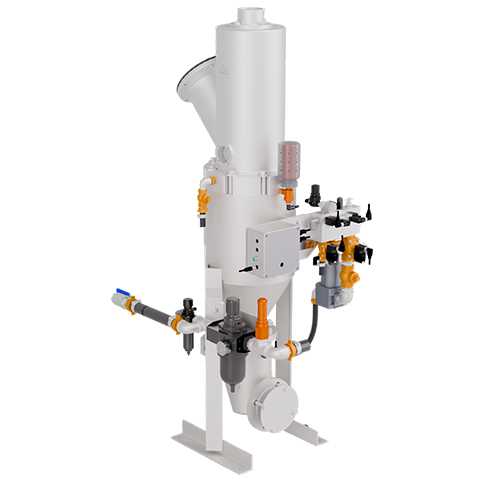
SP-HL Type Pressure Vessel Conveyor
The SP-HL pressure vessel conveyor has been specially developed for the transport of foundry sand using the plug-flow method. Particular attention has been paid to the gentle handling of the material itself, the prevention of wear on the system – particularly the pipework – and the reduction of compressed air consumption. To achieve that, the SP-HL conveyor operates quasi-continuously, feeding the material in batches from the unpressurised pre-chamber into the conveying line, which is continuously pressurised. Extremely short filling phases and the constant supply of air into the conveying line result in a uniform, uninterrupted flow of material. This results in a continuous flow of material, in contrast to conventional pressure vessel conveyors, where the flow is interrupted to reduce the conveying pressure and to refill the pressure vessel with material. Segregation is avoided and dust emissions are prevented. SP-HL conveyors operate largely without abrasion or damage. They are particularly space-saving, low-maintenance and low noise.
An additional advantage of this conveyor type is its compact design. Despite its small volume compared with conventional vessel conveyors, high conveying capacity are achieved thanks to its continuous operation mode. The relatively small pressure vessel does not require periodic inspections by a notified body , so that associated downtimes and costs are avoided.
Type S Pressure Vessel Conveyor
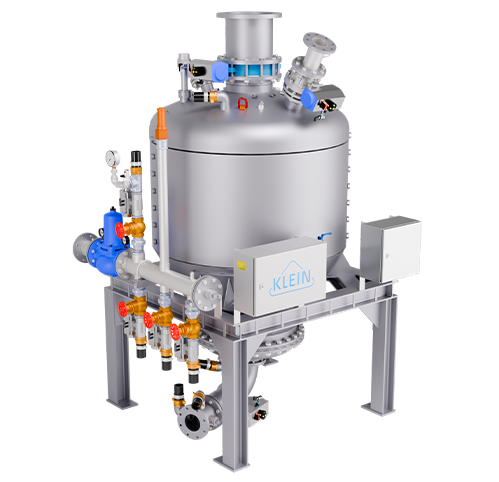
Dense-phase conveying is a discontinuous vessel-based conveying method. It operates in an alternating ‘filling–conveying’ cycle. In this process, a conveying medium (usually compressed air) propels the bulk material to be transported – which is mixed with the conveying medium by means of fluidisation plates, thereby rendering it free-flowing – out of the pressurised vessel conveyor through a conveying pipeline to the receiving unit. In dense-phase conveying, appropriate measures – such as a loading control system – are used to maintain the ratio between the bulk material and the conveying medium within the optimum range. This minimises the conveying speed and, consequently, wear and tear on the system. The S pressure vessel conveyor is particularly suitable for conveying dry and free-flowing bulk materials of any type. This conveyor is also very well suited to the pneumatic transport of mixtures of granular and dusty bulk materials.
Systems utilising this type of conveyor are fully enclosed. They operate with minimal abrasion and damage. Segregation is avoided and dust emissions are prevented. They require little maintenance and are low noise.
Type T Pressure Vessel Conveyor
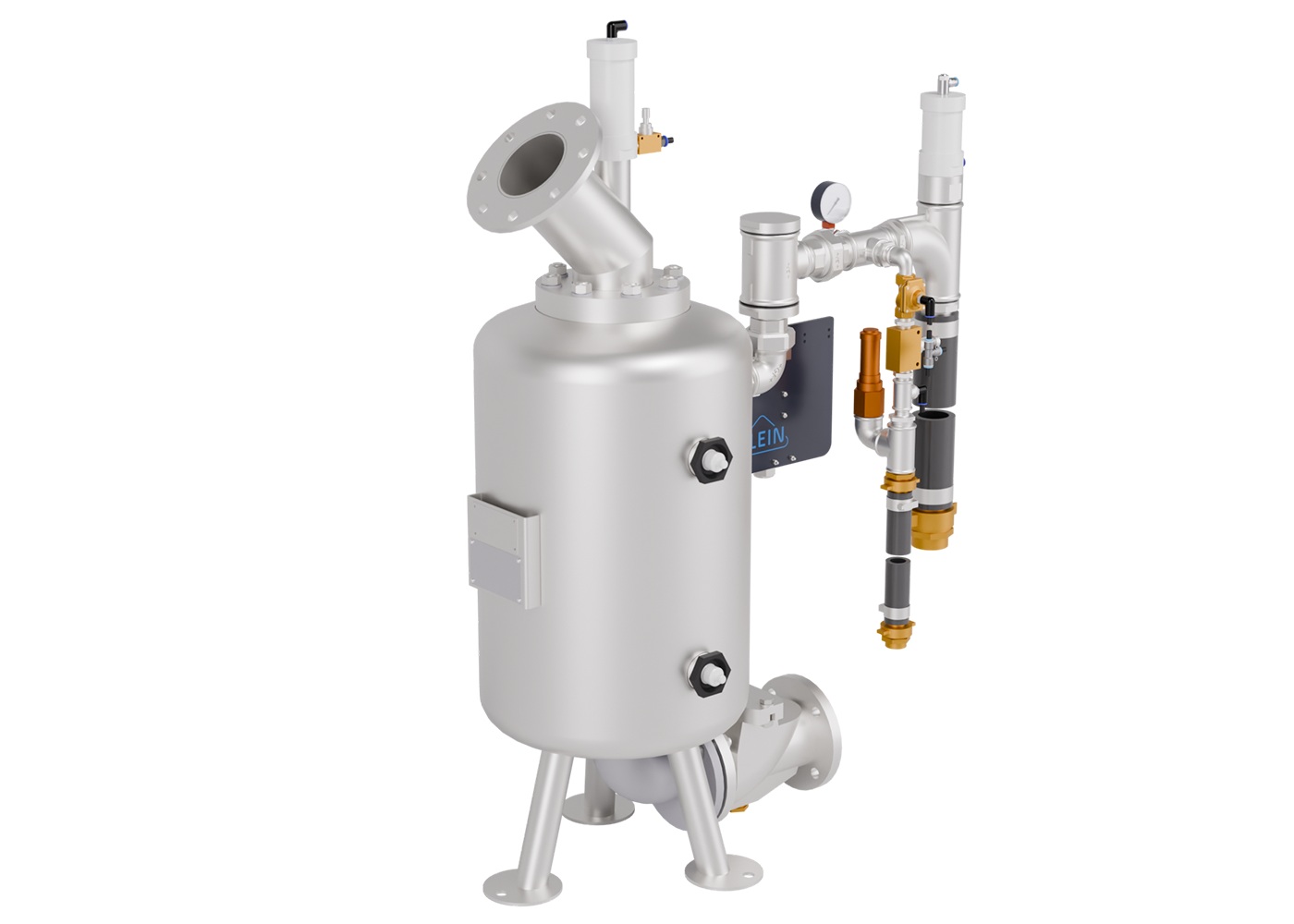
The proven conveyor for the pneumatic transport of dry, granular and free-flowing bulk materials using the thrust-type conveying method. The T-series pressure vessel conveyors are used in the following sectors: the iron and steel industry, glass and ceramics production, the plastics industry, minerals and aggregates, and sanding plants for rail vehicles.
Thrust conveying is a discontinuous conveying method. It operates in an alternating ‘filling-conveying’ cycle. In this process, a conveying medium (usually compressed air) gently moves the bulk material out of the pressure vessel conveyor through a conveying line to a recipient. During the conveying process, depending on the settings and product properties, plugs form within the conveying pipe; their length and spacing may vary as the conveying distance increases. However, dense-phase or dilute-phase conveying are ruled out, so that excessively high flow velocities are avoided and wear is minimised.
After the pressure vessel has been emptied at the end of each conveying cycle, the conveying pipe remains filled. Consequently, each new conveying cycle can be started against the full pipe to prevent the occurrence of free-flow conveying and to minimise wear on the conveying material and the pipework, as well as reduce the compressed air consumption. Segregation is avoided and the emission of dust is prevented. T-conveyors operate largely without abrasion or damage. They require little maintenance and are low-noise.
More products
Sandlifter
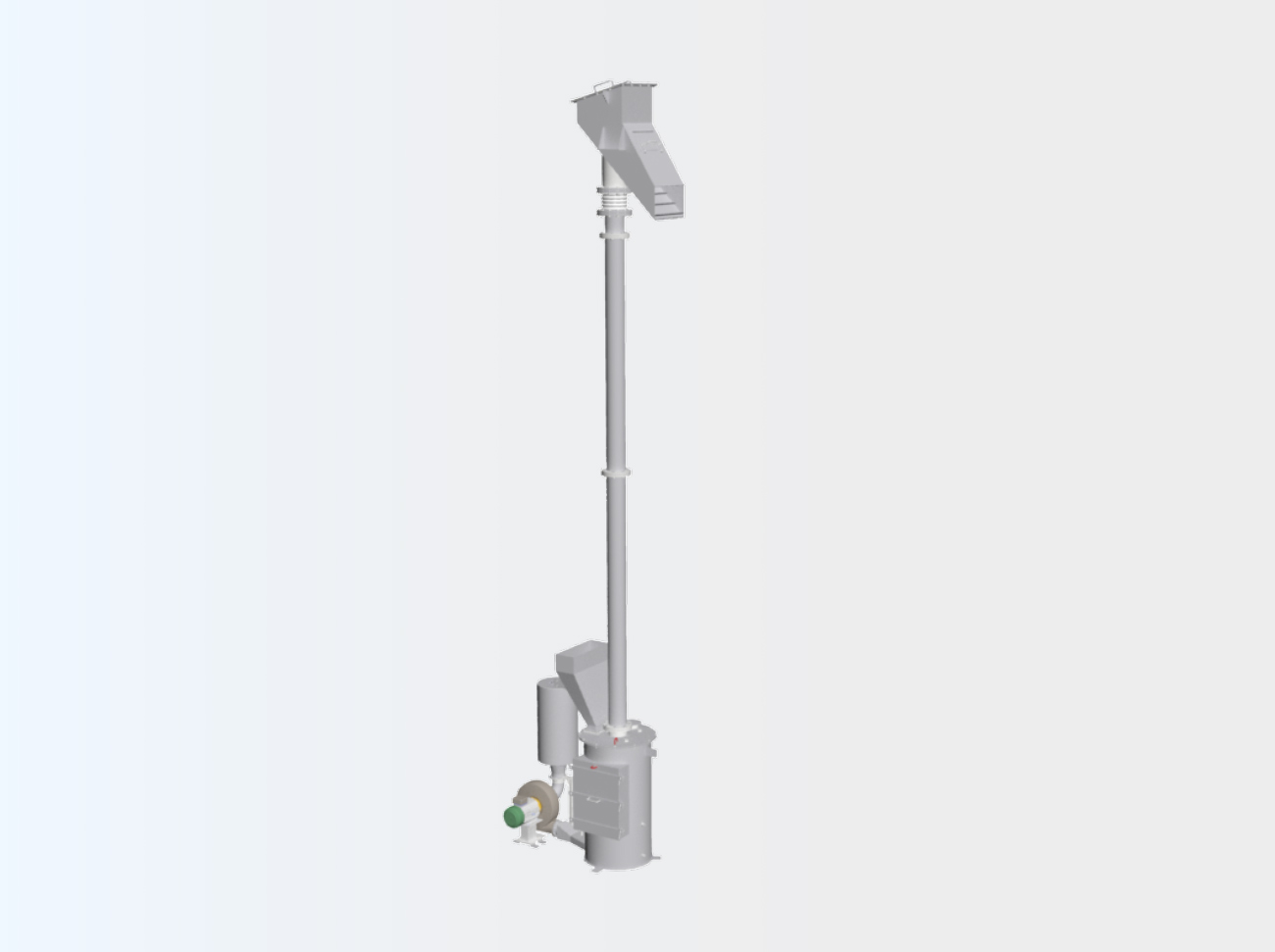
The Sandlifter—the solution for vertical pneumatic bulk material transport! This innovative system is specifically optimized for conveying sand and offers the following advantages:
- direct vertical transport of typical foundry sands
- a particularly gentle conveying process
- capacity of up to 25 t/h
- integrated blower for generating the conveying air
Conveying capacity
Material temperatures
show more features hide features
- Compact design
- Very low wear compared to bucket elevators or other mechanical methods